Managing multiple personal loans, credit card bills and monthly EMIs can make your finances difficult to control. Different interest rates, repayment dates and outstanding balances may create additional pressure on your monthly budget.
A Debt Consolidation Loan in Delhi may help eligible borrowers combine certain existing debts into a single repayment arrangement. Instead of managing several separate payments, a borrower may use a new loan to repay eligible outstanding balances and then make one scheduled EMI.
However, getting a consolidation loan requires careful planning. Before applying, it is important to understand the eligibility criteria, required documents, application process, interest rates, charges and repayment conditions.
What Is a Debt Consolidation Loan?
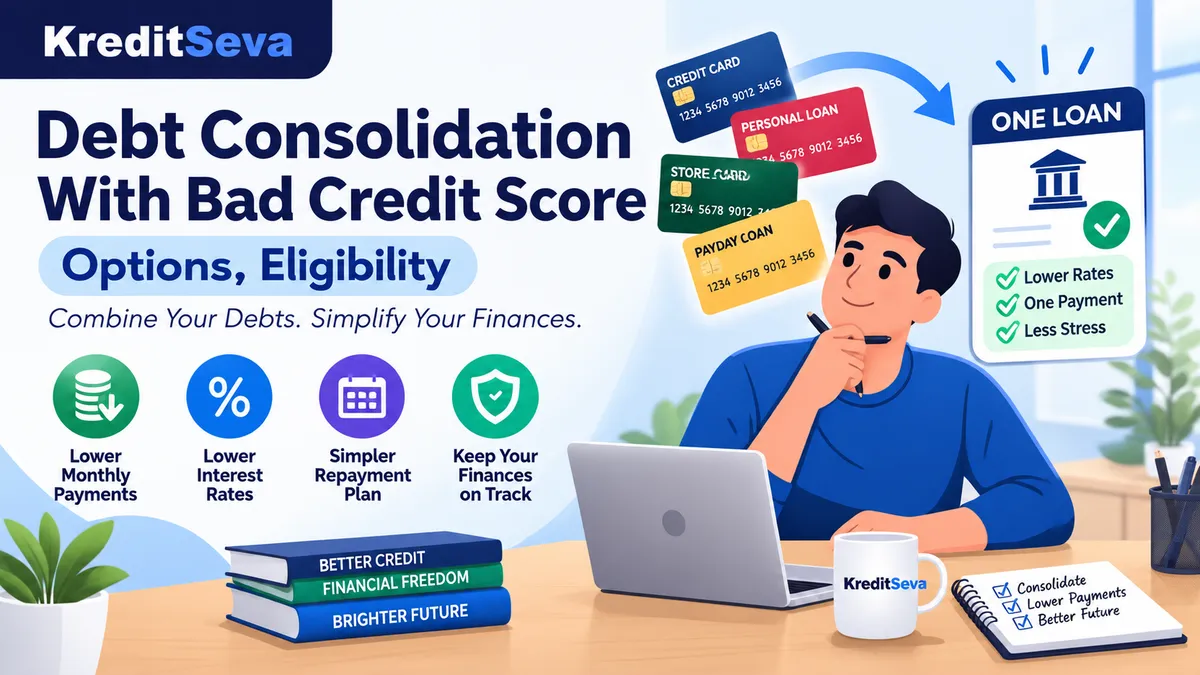
A debt consolidation loan is a new loan used to repay multiple existing debts, subject to the lender’s terms and approval. These debts may include personal loans, credit card balances or other eligible unsecured borrowings.
For example, suppose a borrower in Delhi has:
- Personal Loan A: ₹1,00,000 outstanding
- Personal Loan B: ₹75,000 outstanding
- Credit Card Dues: ₹50,000
The total outstanding debt is ₹2,25,000, excluding any applicable closure charges. The borrower may explore a consolidation loan to repay these balances through a new loan arrangement.
The main purpose is to simplify repayment and make monthly financial planning easier. However, consolidation does not automatically reduce the total debt or guarantee a lower interest cost. The new loan’s complete terms must be compared with the existing obligations.
How to Apply for a Debt Consolidation Loan in Delhi?
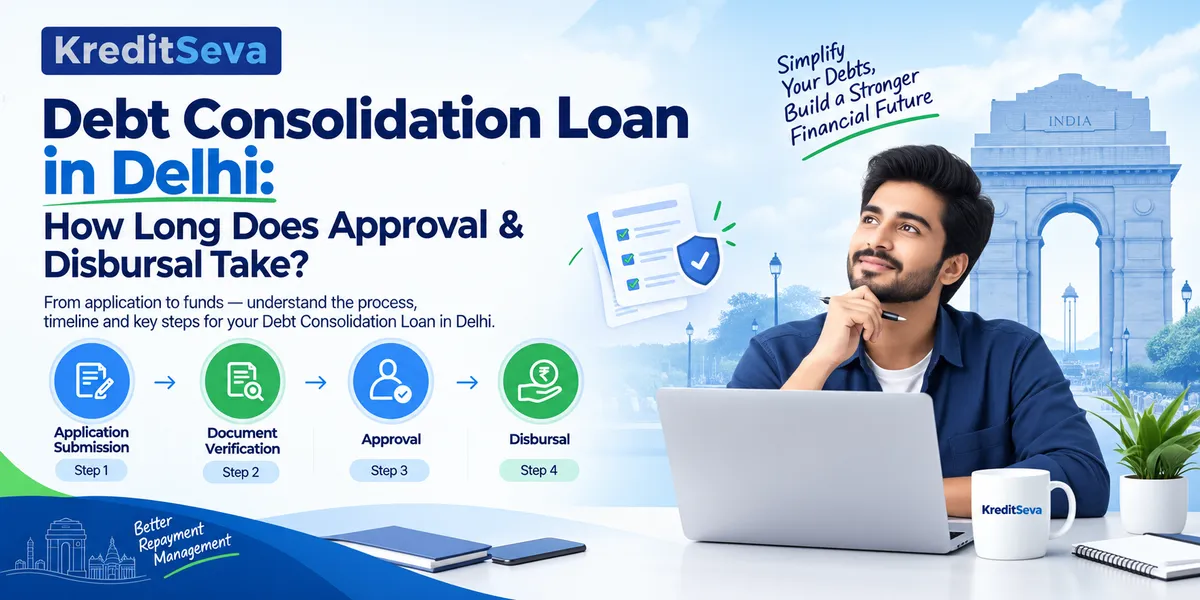
The application process may differ between banks, NBFCs and other lenders. However, borrowers generally need to follow these important steps.
1. Calculate Your Total Outstanding Debt
Before applying, prepare a complete list of your existing financial obligations. Include the outstanding principal, current EMI, interest rate, remaining tenure and any applicable prepayment or foreclosure charges.
Also check whether the lender allows the type of debt you want to consolidate. Not every loan or credit card balance will necessarily qualify.
Knowing your exact outstanding amount helps you estimate the loan requirement and avoid borrowing more than necessary.
2. Check Your Eligibility
Lenders assess applications according to their own eligibility policies. Common factors may include:
- Age and residential status
- Monthly income or business earnings
- Employment or business stability
- Credit history and repayment record
- Existing EMIs and financial obligations
- Overall repayment capacity
- Loan amount requested
If you are exploring debt consolidation in Delhi, check the lender’s requirements before submitting an application. Meeting basic criteria does not guarantee approval, because the final decision depends on the lender’s assessment.
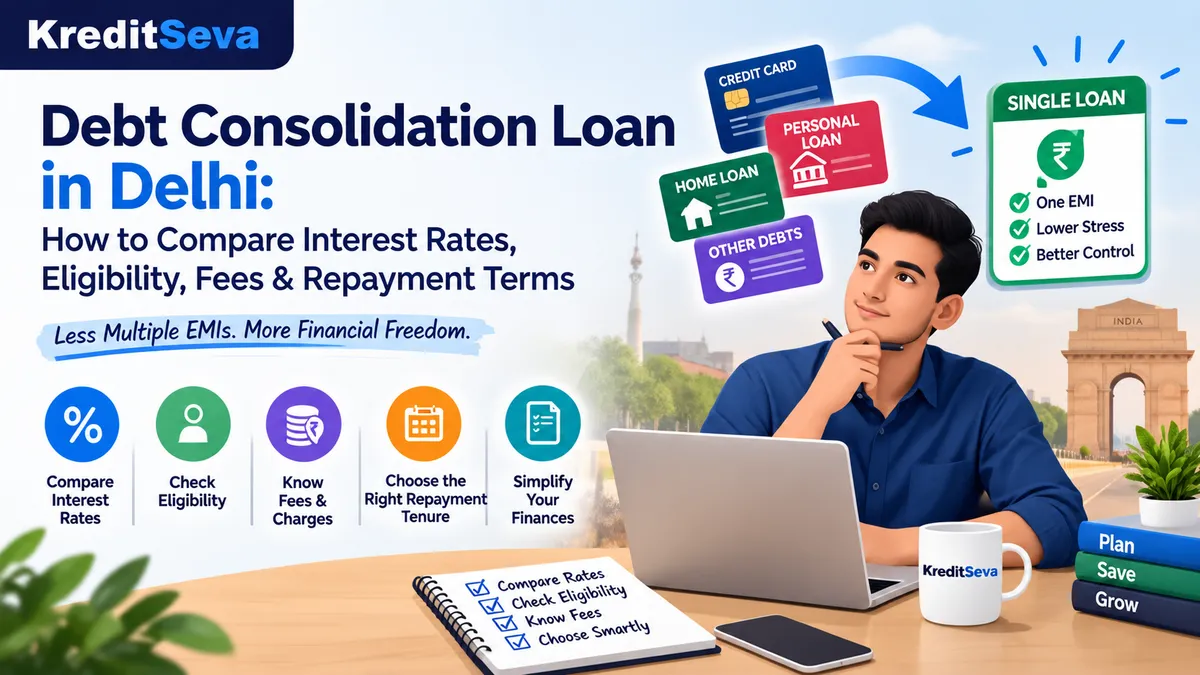
3. Compare Loan Offers and Total Costs
Choosing a consolidation loan only because it advertises a low interest rate can be misleading. The actual cost depends on the interest rate offered to you, repayment tenure, processing fees and other applicable charges.
Compare the following details:
| Factor | What to Check |
|---|---|
| Interest rate | Actual rate offered to you |
| Loan tenure | Total repayment period |
| EMI | Monthly amount payable |
| Processing fee | Upfront cost of the loan |
| Prepayment terms | Conditions and applicable charges |
| Total repayment | Principal plus total interest and applicable charges |
A longer tenure may reduce the EMI but increase the total interest paid. A shorter tenure may cost less in interest but require a higher monthly payment.
When comparing a Debt Consolidation Loan in Delhi, evaluate whether the proposed EMI fits your regular income and essential expenses.
4. Prepare the Required Documents
Proper documentation can help avoid delays during the application process. Requirements vary by lender and applicant profile, but commonly requested documents may include:
- PAN card and identity proof
- Address proof
- Recent salary slips or other income documents
- Recent bank statements
- Employment or business details
- Existing loan statements
- Credit card outstanding statements
- Details of current EMIs
If you are self-employed or operate a business in Delhi, the lender may request additional financial records, such as business income documents or relevant tax information.
Always confirm the latest requirements directly with the lender.
5. Submit Your Loan Application
After checking eligibility, calculating your loan requirement and comparing terms, submit your application through the lender’s official website, branch or authorised application channel.
You may need to provide details about your income, employment, existing loans, credit card dues and requested loan amount.
Review all information before submitting the form. Incorrect details or incomplete information may lead to additional verification or processing delays.
6. Complete Credit Assessment and Verification
Once the application is submitted, the lender may review your credit history, income, bank statements, existing liabilities and repayment capacity.
The lender may also verify your identity, employment, business information or other supporting documents. Depending on the application, additional clarification may be required.
Your credit score can be relevant to the assessment, but it is not the only factor. Income, existing debt, repayment behaviour and lender-specific criteria may also influence the decision.
7. Review the Approval and Loan Agreement
If the lender approves your application, carefully examine the loan offer before accepting it. Check the sanctioned amount, interest rate, EMI, tenure, applicable fees and repayment conditions.
Ask whether the loan proceeds will be paid to you or directly used to close eligible existing debts. Also confirm the process for closing those accounts and obtaining relevant closure documents.
A Debt Consolidation Loan in Delhi should be considered only after you understand the financial obligations created by the new loan.
How Can You Improve Your Application Preparation?
Although no lender can guarantee approval, borrowers can take practical steps to make the process more organised:
Review your credit report: Check for incorrect personal details, unfamiliar accounts or inaccurate repayment information.
Maintain repayment discipline: Avoid missing existing EMIs or credit card payments while your application is being considered.
Keep financial records updated: Make sure your income documents and bank statements are complete and consistent.
Borrow only what you need: Calculate the amount required to repay eligible debts rather than applying for an unnecessarily large loan.
Compare multiple offers carefully: Focus on the total cost, not just the advertised interest rate or quick-approval promise.
Is Debt Consolidation Suitable for Everyone?
Debt consolidation may be useful for borrowers who are struggling to manage several repayment dates or who qualify for terms that better suit their financial situation. However, it is not a solution for every borrower.
If the new loan has a higher total cost, a long tenure or an EMI that is difficult to afford, consolidation may not improve your financial position. Borrowers should also avoid taking on new unnecessary debt after consolidating existing balances.
Before choosing a Debt Consolidation Loan in Delhi, compare your current obligations with the proposed loan and assess whether the new repayment plan is sustainable.
Final Takeaway
Applying for a Debt Consolidation Loan in Delhi involves more than completing an online form. You need to calculate your existing debt, check eligibility, compare loan costs, prepare documents, complete verification and understand the final agreement.
A carefully evaluated consolidation loan may simplify repayment for eligible borrowers. However, the right choice depends on your income, outstanding debts, credit profile and the actual terms offered by the lender.
Take time to compare the available options and make sure the repayment plan fits your financial capacity before proceeding.