Managing one credit card can be simple, but handling three or more credit cards with different outstanding balances, due dates, minimum payments, and interest charges can quickly become difficult. If a large portion of your monthly income is going toward credit card payments, you may be looking for a simpler repayment strategy.
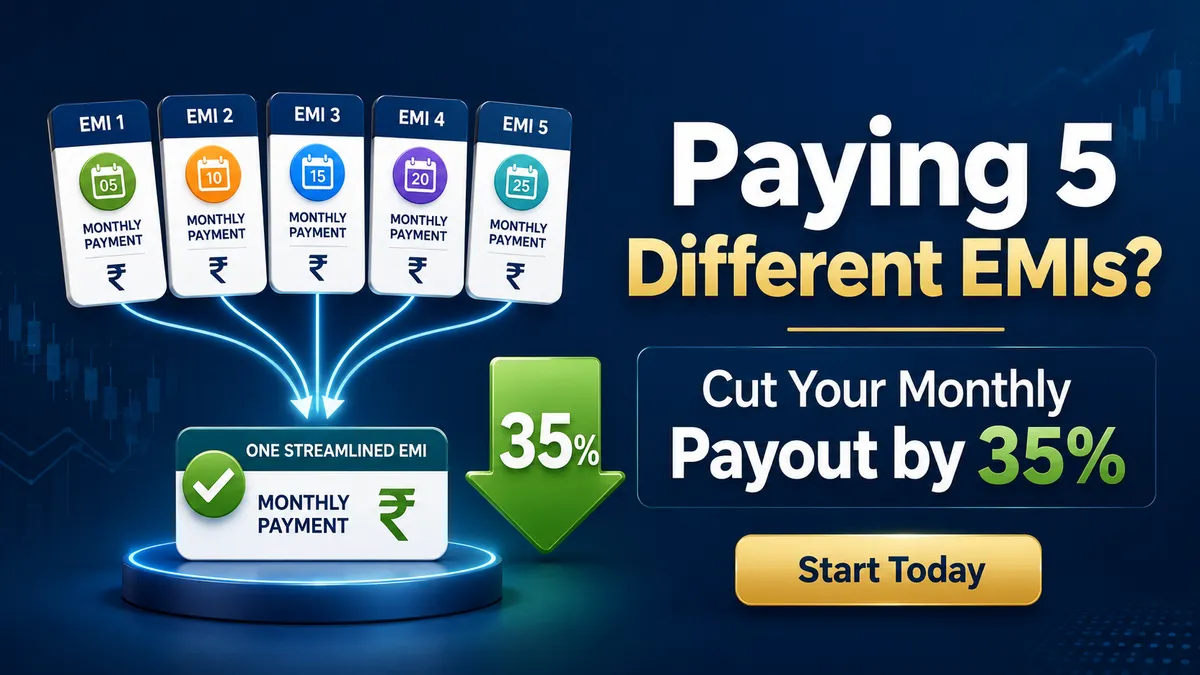
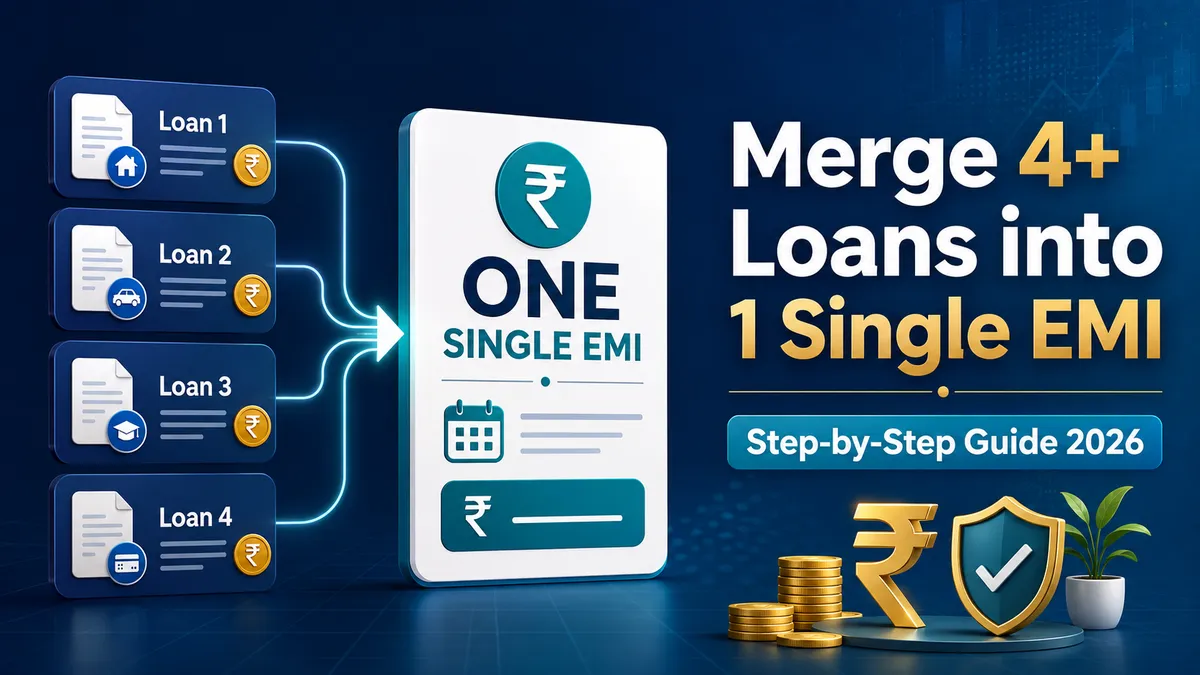
One option is credit card debt consolidation. This involves using a single loan to pay off multiple eligible credit card balances, leaving you with one loan and one monthly EMI.
However, consolidating credit card debt does not automatically eliminate debt or guarantee savings. The new loan should be compared carefully with your existing credit card costs before making a decision.
What Is Credit Card Debt Consolidation?
Credit card debt consolidation means combining multiple credit card balances into one repayment obligation, usually through a personal or debt consolidation loan.
Suppose you have:
- Credit Card 1 outstanding: ₹80,000
- Credit Card 2 outstanding: ₹60,000
- Credit Card 3 outstanding: ₹40,000
Your total credit card debt is ₹1,80,000.
Instead of managing payments across three cards, an eligible borrower may consider taking a loan to pay off multiple credit cards. The loan amount can then be used to clear eligible outstanding card balances, after which the borrower repays the new loan through a single EMI.
How Can One Loan Pay Off 3+ Credit Cards?
The process is relatively straightforward.
You first calculate the total outstanding amount across all the credit cards you want to clear. You can then explore a personal loan for credit card debt consolidation for an appropriate amount.
If approved and disbursed, the loan proceeds can be used to repay those credit card balances. You then repay the consolidation loan according to its agreed EMI and tenure.
In simple terms:
Multiple Credit Cards → One Consolidation Loan → One Monthly EMI
This can make monthly repayment easier to track, but whether it saves money depends on the interest rate, fees, loan tenure, and other terms.
Why Consider Consolidating Multiple Credit Card Debts?
1. Manage One EMI Instead of Multiple Payments
One of the biggest practical benefits of combining credit card debt into one loan is simpler repayment management.
Instead of remembering several due dates, you have one scheduled EMI.
This can make monthly budgeting easier and reduce the chances of accidentally missing a payment.
2. Potentially Get a Lower Interest Cost
Credit card balances that remain unpaid can attract significant finance charges. Depending on your credit profile and lender offer, a personal loan may be available at a different interest rate.
If the new loan's overall borrowing cost is lower than your existing card debt, consolidation could potentially reduce interest expenses.
However, always compare the complete repayment amount rather than only the advertised interest rate.
3. Create a Defined Repayment Timeline
Revolving credit card debt can continue for a long time if you repeatedly make only minimum payments while continuing to use the cards.
A personal loan generally comes with a fixed repayment tenure.
Therefore, using one loan to pay off credit cards can provide a clearer repayment schedule.
How to Consolidate 3 or More Credit Cards with One Loan
Step 1: Calculate Your Total Credit Card Debt
Start by checking the latest statement for each credit card.
Record:
- Total outstanding balance
- Minimum amount due
- Applicable interest or finance charges
- Payment due date
- Any overdue amount
Add all balances you plan to consolidate.
Knowing the exact amount prevents you from unnecessarily borrowing more than required.
Step 2: Review Your Credit Profile
Lenders generally assess your credit history before approving a personal or consolidation loan.
Your repayment history, outstanding debt, income, credit utilization, and recent credit applications can influence eligibility and the terms offered.
Before searching for a debt consolidation loan for credit cards, review your credit report and check for incorrect information.
Step 3: Compare Loan Offers
Do not accept the first available offer simply because the EMI looks lower.
Compare:
- Interest rate
- Processing charges
- Loan tenure
- Monthly EMI
- Prepayment or foreclosure terms
- Late-payment charges
- Total repayment amount
A lower EMI achieved by significantly extending the tenure may result in a higher total interest cost.
Step 4: Choose an Affordable EMI
The new EMI should fit comfortably within your monthly budget.
For example, if your current credit card payments are putting significant pressure on your cash flow, selecting a structured EMI may make repayment easier.
However, avoid choosing an unnecessarily long tenure simply to obtain the lowest possible monthly EMI.
Step 5: Use the Loan to Clear Credit Card Balances
Once the consolidation loan is disbursed, use the funds for the intended purpose and clear the eligible credit card balances included in your repayment plan.
After making payments, verify that the balances have been updated correctly.
Step 6: Avoid Building New Credit Card Debt
This is one of the most important steps.
Credit card debt consolidation works best when you avoid immediately accumulating new card balances after consolidation.
If you clear three cards with a loan and then begin using those cards heavily again, you could end up managing both the consolidation loan and fresh credit card debt.
Is a Personal Loan Better Than Paying Minimum Due?
Paying only the minimum amount due may keep your account from being immediately treated as unpaid in certain circumstances, but the remaining balance can continue attracting applicable charges and interest.
A structured personal loan to clear credit card debt may provide a defined EMI and repayment period.
However, whether it is financially better depends on the actual loan offer.
Before switching, compare:
Existing card repayment cost vs. total consolidation loan repayment cost.
Include processing fees and other applicable charges in your calculation.
Who Should Consider Credit Card Debt Consolidation?
A credit card consolidation loan in India may be worth evaluating if you:
- Have outstanding balances on three or more credit cards
- Find multiple payment dates difficult to manage
- Are paying substantial finance charges
- Have a stable source of income
- Can qualify for suitable loan terms
- Want a structured repayment schedule
- Are committed to controlling new credit card spending
Consolidation may not be beneficial if the new loan has high fees, an expensive interest rate, or a repayment tenure that substantially increases your total borrowing cost.
Mistakes to Avoid When Consolidating Credit Card Debt
Do not treat debt consolidation as new spending money.
Avoid applying for several loans simultaneously, borrowing significantly more than required, choosing a loan based only on EMI, or ignoring processing and prepayment charges.
Most importantly, do not continue accumulating large credit card balances after consolidation.
The purpose of consolidating multiple credit card debts should be to create a manageable path toward repayment.
Final Thoughts
If you are stuck managing three or more credit cards, using one loan to pay off multiple credit cards can simplify your repayment structure.
Instead of dealing with multiple outstanding balances and payment dates, a suitable consolidation loan can convert eligible debts into one EMI with a defined repayment tenure.
But consolidation should be based on careful calculations. Compare the new interest rate, processing charges, tenure, EMI, and total repayment cost with your existing credit card obligations.
The goal of credit card debt consolidation should not simply be to move debt from credit cards to another loan. It should help you create a structured and sustainable plan to become debt-free.
Frequently Asked Questions
1. Can I pay off 3 or more credit cards with one personal loan?
Yes, subject to lender eligibility and loan terms, a personal loan can potentially be used to clear multiple credit card balances. Before proceeding, compare the loan's total repayment cost with your existing credit card obligations.
2. Does consolidating credit card debt reduce my EMI?
It may reduce your combined monthly payment depending on the new loan's interest rate and tenure. However, a lower EMI does not necessarily mean a lower total cost because longer repayment periods can increase overall interest.
3. Will paying off credit cards with a personal loan improve my credit score?
There is no guaranteed improvement. Credit scores depend on multiple factors, including repayment history, credit utilization, new enquiries, outstanding balances, and future credit behaviour. Timely repayment and responsible credit management remain important.