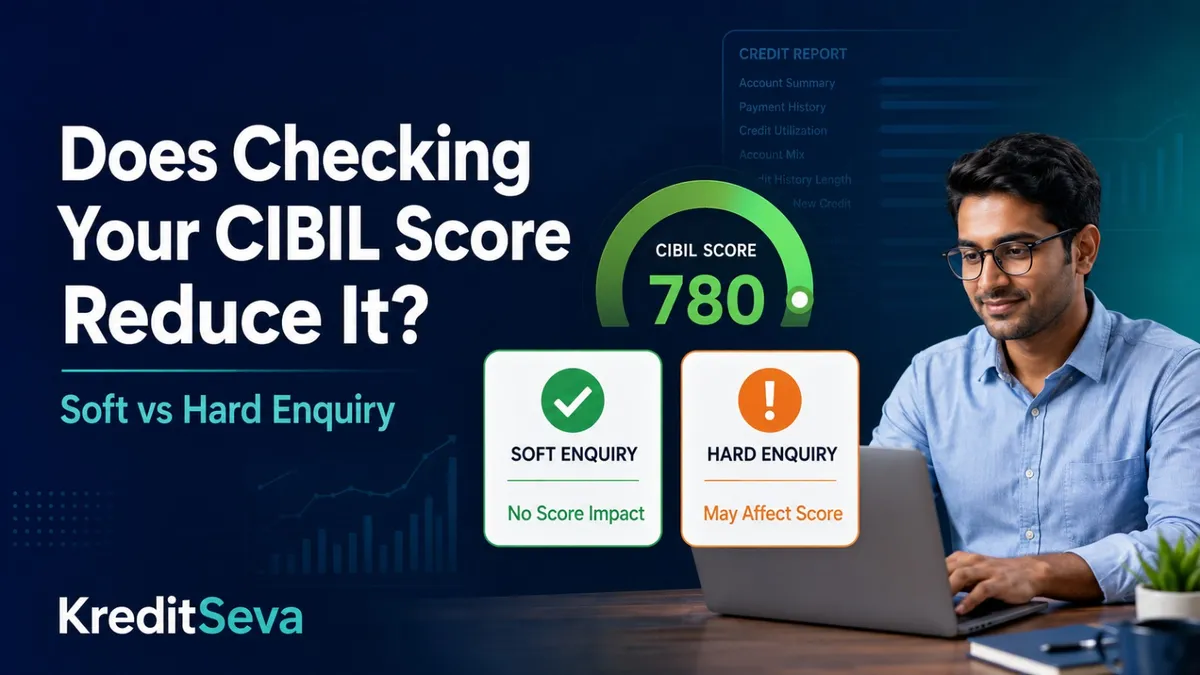
Many people avoid checking their credit score because they believe that every credit check lowers it. But does checking CIBIL score reduce it? The simple answer is no—checking your own CIBIL score is generally considered a soft enquiry and does not negatively affect your score.
However, when you formally apply for a personal loan, credit card or another credit facility, the lender may check your credit report. This is known as a hard enquiry. Multiple hard enquiries within a short period may affect your overall credit profile.
Understanding the difference between a soft enquiry and a hard enquiry can help you monitor your credit health and apply for loans more responsibly.
What Is a CIBIL Score?
A CIBIL score is a three-digit number ranging from 300 to 900. It is calculated using information available in your credit report, such as your repayment history, active and closed credit accounts, outstanding balances and credit enquiries.
A higher score generally indicates responsible credit behaviour and can improve your chances of qualifying for suitable credit offers. However, a good score does not guarantee loan approval. Banks and NBFCs also assess your income, employment stability, existing EMIs, repayment capacity, documents and their internal lending policies.
Does Checking Your CIBIL Score Reduce It?
No, checking your own CIBIL score normally does not reduce it. When you access your credit report directly through an authorised credit bureau or an eligible credit-monitoring platform, it is treated as a soft enquiry.
A soft enquiry is performed for informational or monitoring purposes. Since you are not formally requesting new credit, it is not treated in the same way as a lender’s enquiry during a loan application.
Therefore, if you are wondering, “Does checking my credit score affect my CIBIL score?”, you can review your own report without worrying about a negative impact from the self-check itself.
Regular monitoring can help you identify reporting errors, unfamiliar loan accounts, incorrect overdue amounts and unauthorised enquiries.
What Is a Soft Enquiry?
A soft enquiry is a credit check that is not connected to a formal request for a new loan or credit card. It may occur when:
- You check your own CIBIL score.
- You access your credit report for monitoring.
- A financial institution provides an indicative or pre-qualified offer.
- An authorised credit-monitoring service reviews your credit profile.
Soft enquiries generally do not affect the CIBIL score and may not be visible to lenders in the same way as hard enquiries. You can check your score periodically to understand your credit position before submitting a loan application.
What Is a Hard Enquiry?
A hard enquiry usually occurs when a bank, NBFC or credit card issuer accesses your credit report after you formally apply for credit.
Examples include applying for:
- A personal loan
- A home or car loan
- A business loan
- A new credit card
- A consumer durable loan
- Another credit facility
A hard enquiry becomes part of your credit report. One genuine application may not necessarily cause a major change, but submitting several applications within a short period can create multiple enquiries.
Frequent hard enquiries may suggest that you are actively seeking credit from several lenders. This can affect how lenders assess your financial position and repayment risk.
Soft Enquiry vs Hard Enquiry
The main difference between a soft enquiry and a hard enquiry is the purpose of the credit check.
| Basis | Soft Enquiry | Hard Enquiry |
|---|---|---|
| Purpose | Credit monitoring or informational check | Formal loan or credit-card application |
| Performed by | You or an authorised monitoring service | Bank, NBFC or credit-card issuer |
| Score impact | Generally does not affect the score | Multiple enquiries may affect the credit profile |
| Loan application | Not connected to a formal application | Created after applying for credit |
| Visibility | Primarily for monitoring | Recorded in the credit report |
Understanding soft enquiry vs hard enquiry is important because checking your own score is different from submitting multiple loan applications.
Why Can Multiple Hard Enquiries Be a Problem?
When you apply with several banks or loan apps simultaneously, each lender may conduct a separate credit check. This can create multiple hard enquiries on your credit report.
A lender reviewing your application may interpret frequent enquiries as a sign of urgent credit requirements or possible financial stress. Multiple recent applications can therefore affect your eligibility, even if your repayment history is otherwise satisfactory.
Instead of applying everywhere, compare the basic eligibility criteria and select a lender that is more suitable for your income, employment type, existing obligations and required loan amount.
How Often Should You Check Your CIBIL Score?
There is no need to check your score every day. However, reviewing your credit report periodically can help you stay informed and detect errors early.
You should consider checking it:
- Before applying for a major loan or credit card
- After repaying or closing a loan
- When an account still appears active after closure
- If you notice an unexpected change in your score
- When you suspect identity theft or an unauthorised enquiry
- Before planning debt consolidation or a balance transfer
A regular self-check does not normally lower your score because it is treated as a soft enquiry.
Does Checking CIBIL Score on Multiple Apps Reduce It?
The effect depends on the type of check being performed. If a platform only allows you to access or monitor your score, it is generally a soft enquiry. However, if the platform submits your information to multiple lenders as part of a loan application, those lenders may conduct hard enquiries.
Before entering your PAN and other details, read the consent statement carefully. Confirm whether you are only checking your credit score or formally applying for loan offers.
Avoid clicking “Apply Now” on multiple lending platforms unless you genuinely intend to submit those applications.
How Can You Limit Unnecessary Hard Enquiries?
Follow these steps to protect your credit profile:
1. Check Eligibility Before Applying
Review the lender’s minimum income, age, employment and credit requirements before submitting an application.
2. Apply Selectively
Do not submit applications to several banks and NBFCs at the same time. Choose options according to your financial profile.
3. Avoid Reapplying Immediately After Rejection
If your loan application is rejected, first understand the possible reason. Review your income, existing EMIs, documents and credit report before applying again.
4. Monitor Your Credit Report
Check the enquiry section for unfamiliar lender names or applications you do not recognise. Contact the concerned lender and raise a dispute for any genuine inaccuracy.
5. Maintain Responsible Credit Behaviour
Pay EMIs and credit-card bills on time, keep credit utilisation manageable and borrow only what you can comfortably repay.
Can You Remove a Hard Enquiry From Your CIBIL Report?
A genuine hard enquiry created after your authorised loan or credit-card application generally cannot be removed simply because the application was rejected.
However, if you find an enquiry that you do not recognise, contact the concerned financial institution. Ask it to verify why your credit report was accessed. You may also raise a dispute through the official CIBIL dispute process.
CIBIL cannot independently change reported information without confirmation from the relevant credit institution.
Conclusion
So, does checking CIBIL score reduce it? Checking your own CIBIL score is generally a soft enquiry and does not lower your score. A hard enquiry is different because it is created when a lender checks your credit report after a formal credit application.
The real concern is not monitoring your own score but submitting too many loan or credit-card applications within a short period. Review your credit report regularly, compare eligibility requirements and apply selectively.
With KreditSeva, you can check your credit score and understand loan options based on your basic financial profile. Final approval, interest rate, loan amount and other terms remain subject to the respective bank or NBFC’s assessment and lending policies.
Frequently Asked Questions
Does a free CIBIL score check reduce the score?
A self-check made for monitoring purposes is generally treated as a soft enquiry and does not reduce the score.
How much does a hard enquiry reduce the CIBIL score?
There is no universal fixed reduction applicable to every person. The impact can depend on the individual credit profile and the number of recent enquiries.
Does loan rejection reduce the CIBIL score?
Loan rejection itself does not directly reduce your score. However, the hard enquiry created during the application remains recorded in your credit report.
Can I check my CIBIL score every month?
Yes, periodic self-checks generally do not affect your score. Regular monitoring can help you identify errors or unfamiliar credit activity.
Do pre-approved loan offers affect the CIBIL score?
Viewing an indicative or pre-qualified offer may involve a soft enquiry. A hard enquiry may occur when you proceed with a formal application, depending on the lender’s process and your consent.