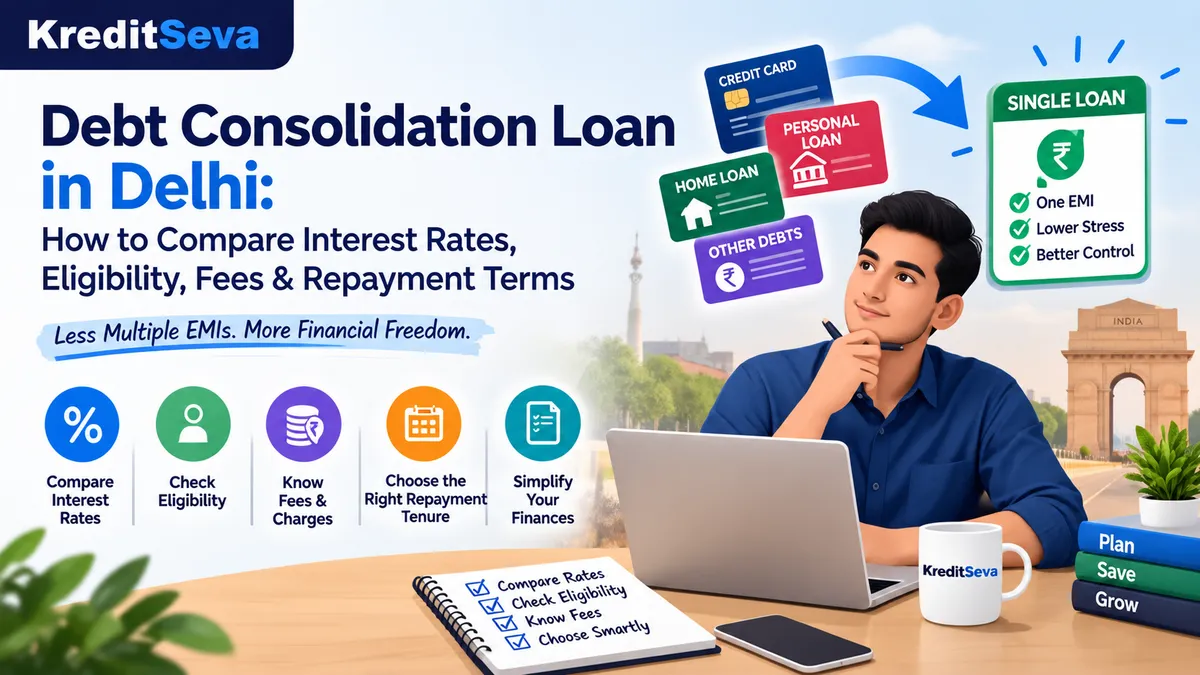
Managing multiple credit cards, personal loans, and monthly EMIs can become difficult when every debt has a different interest rate and due date. For borrowers looking to simplify their finances, a Debt Consolidation Loan in Delhi can be one option to combine multiple outstanding debts into a single repayment plan.
However, choosing a consolidation loan should not be based only on the interest rate. Borrowers should also compare eligibility requirements, processing fees, repayment tenure, prepayment conditions, and the overall cost of borrowing.
What Is Debt Consolidation?
Debt consolidation means taking a new loan to repay multiple existing debts. Instead of managing several lenders and different payment dates, the borrower may have one loan with one scheduled EMI.
For example, someone managing credit card dues, a personal loan, and other unsecured debt may explore a consolidation loan to bring these obligations under one repayment arrangement.
The main purpose is to make repayment more organised and easier to track. However, consolidation does not automatically mean lower costs. The new loan should be evaluated based on its complete repayment structure.
How to Compare a Debt Consolidation Loan in Delhi
1. Compare the Interest Rate Carefully
Interest rate is one of the most important factors when comparing loan offers. However, borrowers should look beyond an advertised “starting from” rate because the actual rate offered can depend on factors such as credit history, income, existing obligations, loan amount, and repayment record.
When comparing a Debt Consolidation Loan in Delhi, ask the lender about the applicable interest rate and total repayment amount. A loan with a slightly lower rate may still cost more if it comes with a significantly longer tenure.
2. Check Eligibility Requirements
Every lender may have different eligibility criteria. These can include age, income, employment or business stability, credit history, existing EMIs, and other financial details.
Before applying, check whether you meet the basic requirements. If you are researching debt consolidation options in Delhi, comparing eligibility criteria first can help you avoid unnecessary applications.
Borrowers should also be aware that multiple loan applications within a short period may result in multiple credit enquiries. Therefore, it is sensible to understand the requirements before submitting an application.
3. Don't Ignore Processing Fees and Other Charges
The interest rate is only one part of the total borrowing cost. A loan may also involve processing charges, documentation fees, late-payment charges, prepayment conditions, or foreclosure-related costs, depending on the lender and loan agreement.
Before selecting a Debt Consolidation Loan in Delhi, request a clear breakdown of all applicable charges. Comparing the total cost rather than just the advertised interest rate can give you a more realistic picture of the offer.
4. Select the Right Repayment Tenure
Loan tenure directly affects both the monthly EMI and the total interest paid.
A longer repayment period can make the monthly instalment more manageable, but it may increase the overall interest cost. On the other hand, a shorter tenure can reduce the total interest but may result in a higher monthly payment.
When evaluating a consolidation loan, choose a tenure that fits comfortably within your monthly budget without unnecessarily extending the repayment period.
5. Calculate How Much Debt You Actually Need to Consolidate
Before applying for a loan to consolidate debts, make a list of all your existing obligations. Include:
- Outstanding loan balance
- Current interest rate
- Monthly EMI
- Remaining tenure
- Credit card outstanding balance
- Any applicable closure charges
This calculation helps you determine the amount actually required. Borrowing more than necessary can increase both your monthly repayment and total interest cost.
For someone considering a Debt Consolidation Loan in Delhi, this step can also help determine whether consolidation will genuinely simplify the current repayment structure.
Documents Usually Required
Documentation can vary depending on the lender and borrower profile. Commonly requested documents may include identity proof, address proof, income documents, bank statements, employment or business details, existing loan statements, and credit-card outstanding information.
It is advisable to check the latest document requirements with the lender before starting the application process.
Is Debt Consolidation the Right Option for You?
Debt consolidation can be useful when multiple debts are difficult to manage or when a borrower qualifies for a more suitable repayment structure. But it is important to understand the reason behind the existing debt.
If excessive spending or poor cash-flow management continues after consolidation, taking another loan may only shift the problem rather than resolve it.
Before choosing a Debt Consolidation Loan in Delhi, compare the complete cost, repayment tenure, eligibility conditions, and applicable charges. Read the loan agreement carefully and understand the repayment obligations before signing.
Final Checklist Before Applying
Before selecting a loan to consolidate your debts, check:
- Interest rate and total repayment amount
- Processing and other applicable fees
- Monthly EMI
- Repayment tenure
- Prepayment or foreclosure conditions
- Eligibility criteria
- Required documentation
- Impact on your overall monthly budget
A carefully evaluated Debt Consolidation Loan in Delhi can make multiple repayments easier to organise. The right option, however, depends on your financial circumstances and the specific terms you qualify for.
FAQs
1. What is a Debt Consolidation Loan in Delhi?
It is a loan that may be used to repay multiple existing debts, allowing the borrower to manage them through a single repayment arrangement, subject to lender eligibility and approval.
2. Can I get a consolidation loan with a low credit score?
Eligibility depends on the lender and the applicant's overall financial profile. Credit history, income, existing obligations, repayment record, and other factors may be considered. Borrowers should compare available options rather than assuming approval is guaranteed.
3. Is debt consolidation always cheaper than existing loans?
Not necessarily. The overall cost depends on the new interest rate, tenure, processing charges, and other applicable fees. Before choosing a Debt Consolidation Loan in Delhi, compare the total repayment amount with your existing debt obligations.