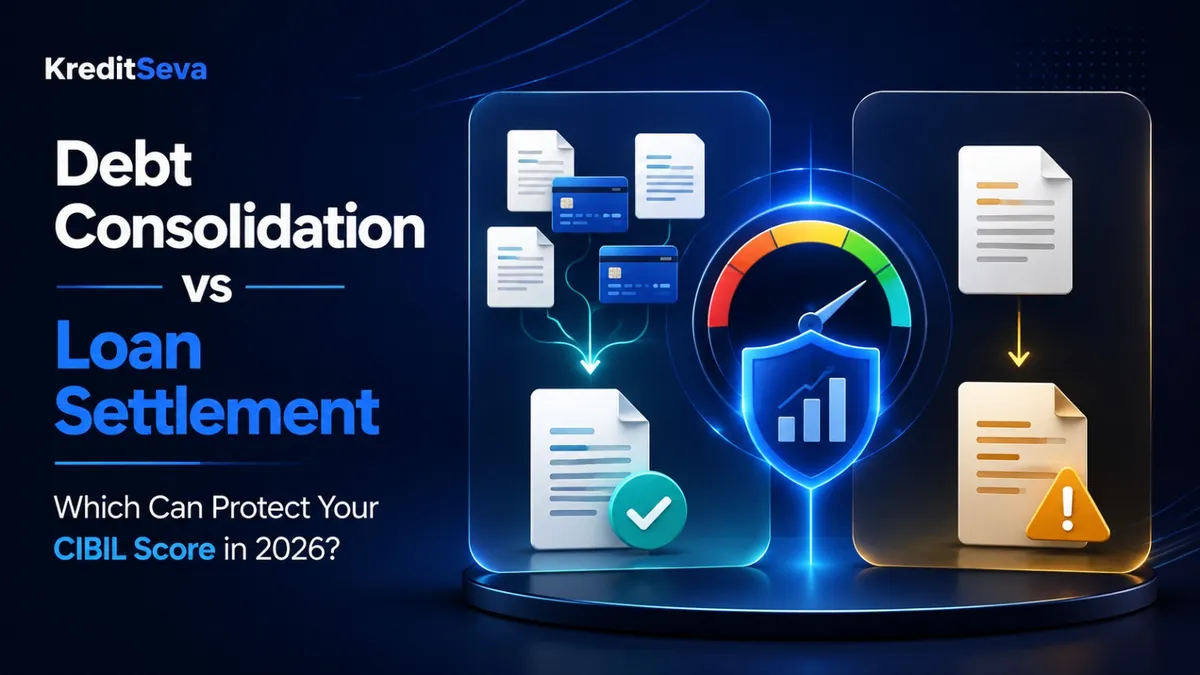
Managing several EMIs, credit-card balances and overdue payments can become stressful. When monthly repayments feel unmanageable, borrowers often compare debt consolidation and loan settlement. Although both approaches deal with debt, they work very differently and can have different consequences for your credit profile.
Understanding debt consolidation vs loan settlement in 2026 can help you make a more informed decision. Debt consolidation generally focuses on reorganising debt and repaying it in full, while loan settlement usually involves negotiating to pay less than the total amount due. Neither option guarantees improvement or protection of your CIBIL score.
At KreditSeva, borrowers can learn about debt consolidation, personal-loan and balance-transfer options before choosing a repayment approach. The objective is to understand affordability and total borrowing cost rather than select a solution only because it offers a lower immediate payment.
What Is Debt Consolidation?
Debt consolidation means combining multiple eligible loans or credit-card dues into one new loan or repayment facility. The new amount is used to clear the selected existing debts, after which you repay one EMI instead of managing several payment dates.
A debt consolidation loan in India may simplify repayment and make budgeting easier. It does not reduce the principal automatically, and it does not erase your obligation. You still repay the consolidated amount according to the new lender’s interest rate, fees and tenure.
KreditSeva helps eligible borrowers explore loan options from financial institutions; however, final approval, interest rate and loan terms remain subject to the concerned lender’s policies and assessment.
What Is Loan Settlement?
Loan settlement may be offered when a borrower is unable to repay the complete outstanding amount. After negotiation, the lender may accept a lower one-time amount and report the account as “settled” rather than “closed.”
Settlement can provide relief in a serious financial hardship, but the unpaid portion is not treated like a normal full repayment. A settled account may signal to future lenders that the original obligation was not completely repaid. Therefore, the loan settlement impact on CIBIL score and future loan eligibility should be considered carefully.
Debt Consolidation vs Loan Settlement: Key Differences
Repayment of the outstanding amount
With debt consolidation, the selected debts are normally paid in full using the new loan, and the borrower continues repaying the consolidated facility. With settlement, the lender accepts less than the complete amount owed under an agreed arrangement.
Status in the credit report
After full repayment and correct reporting, an account may appear as “closed.” A settlement is generally reported as “settled.” This distinction matters because lenders use the credit report to understand past repayment behaviour.
Effect on monthly finances
Consolidation can reduce the number of EMIs and may offer a more manageable monthly payment. However, a lower EMI achieved through a longer tenure can increase the total interest paid. Settlement may reduce the immediate amount required, but it can affect access to credit later.
Eligibility requirements
To qualify for consolidation, borrowers generally need sufficient income, repayment capacity and a credit profile acceptable to the lender. Settlement is usually considered when repayment difficulty has become severe and other workable options may not be available.
Which Option Is Better for Your CIBIL Score?
When comparing debt consolidation vs settlement for CIBIL score, consolidation may be less damaging when all old debts are cleared properly and the new EMI is paid on time. Responsible repayment can support a healthier credit history over time. However, applying for a new consolidation loan may create a hard enquiry, and no specific score improvement is guaranteed.
Loan settlement can negatively affect your credit profile because the account indicates that the complete dues were not paid. TransUnion CIBIL explains that lenders may view a “settled” status as risky. If you can afford full repayment through a sustainable arrangement, settlement should not be treated as an easy shortcut.
When Should You Consider Debt Consolidation?
Debt consolidation may be considered when you have several high-interest debts, find multiple due dates difficult to manage and qualify for a new loan with suitable terms. Before accepting, compare the new interest rate, processing fee, foreclosure charges, tenure and total repayment amount.
Through KreditSeva, borrowers can seek guidance in understanding eligible debt-consolidation options and comparing repayment factors. This support should be used to make an informed decision, not as a guarantee of approval or savings.
Consolidation is useful only when the new repayment is affordable and you avoid accumulating fresh credit-card debt after clearing existing balances.
When Might Loan Settlement Be Considered?
Settlement may be considered during genuine financial hardship when full repayment is not possible even after discussing restructuring, revised tenure or other options with the lender. Obtain all terms in writing and understand how the lender will report the account.
If you previously settled a loan and later become capable of paying the remaining amount, contact the lender to ask about clearing the balance and obtaining a no-objection certificate. Any credit-report update requires confirmation from the concerned lender.
How to Protect Your Credit Profile in 2026
Check your latest CIBIL report before choosing either option. Calculate the total cost, not just the EMI, and avoid applying with several lenders simultaneously. Continue paying existing dues unless a lender formally agrees to different terms. Never trust anyone promising to delete accurate negative information or guarantee a particular CIBIL score.
Conclusion
In the comparison of debt consolidation vs loan settlement in 2026, debt consolidation generally supports full repayment through one organised EMI, whereas settlement involves paying less than the total dues and may leave a “settled” status on your credit report. If consolidation is affordable, it may be more suitable for maintaining responsible repayment behaviour. Settlement may be reserved for serious hardship after understanding its long-term consequences. The right choice depends on your finances and the lender’s policies.
If you are managing multiple EMIs, KreditSeva can help you explore suitable debt-consolidation and loan options based on your requirements. Always review the applicable rate, charges, tenure and total repayment amount before proceeding.
Frequently Asked Questions
Does debt consolidation improve the CIBIL score?
It does not automatically improve the score. Timely repayment and responsible credit use after consolidation may support a healthier credit profile.
Does loan settlement permanently damage the CIBIL score?
A settled status may negatively affect your credit profile and future applications. Its impact varies according to the complete credit history and lender assessment.
Can a settled account be changed to closed?
You may ask the lender whether the remaining amount can be paid. If accepted, obtain an NOC and request the appropriate update; CIBIL requires confirmation from the lender.